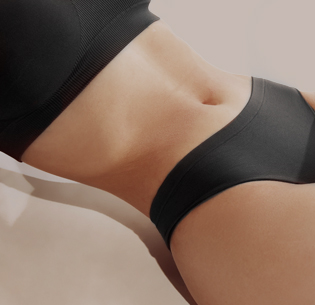
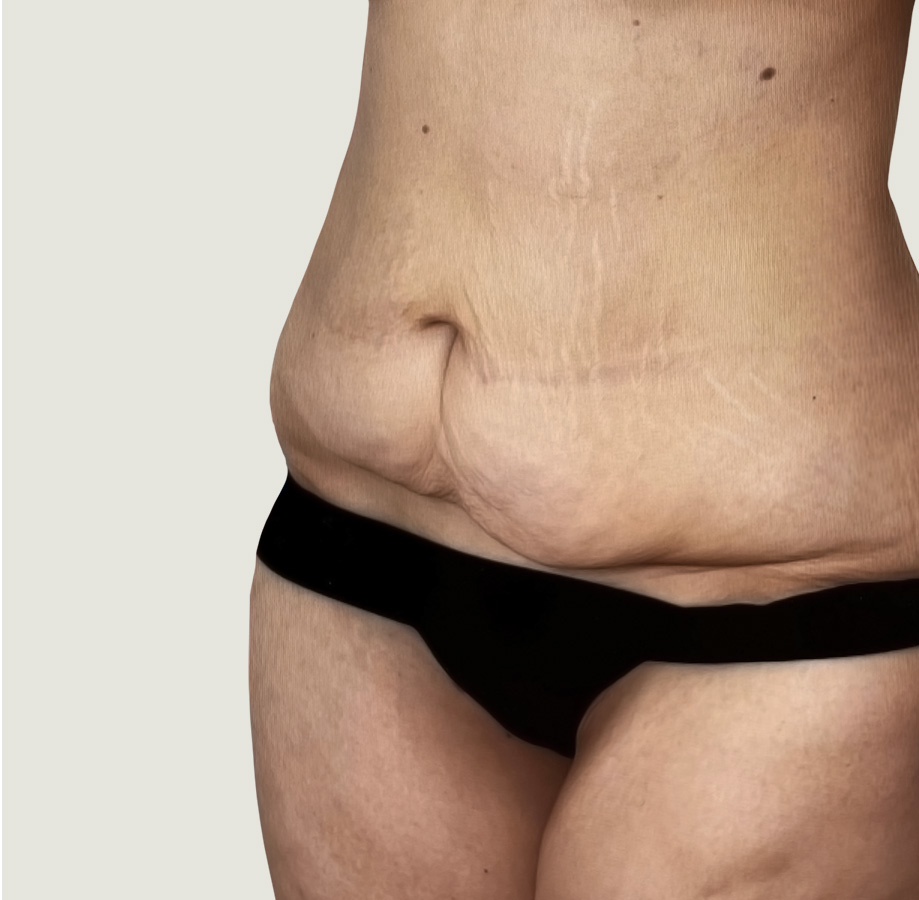
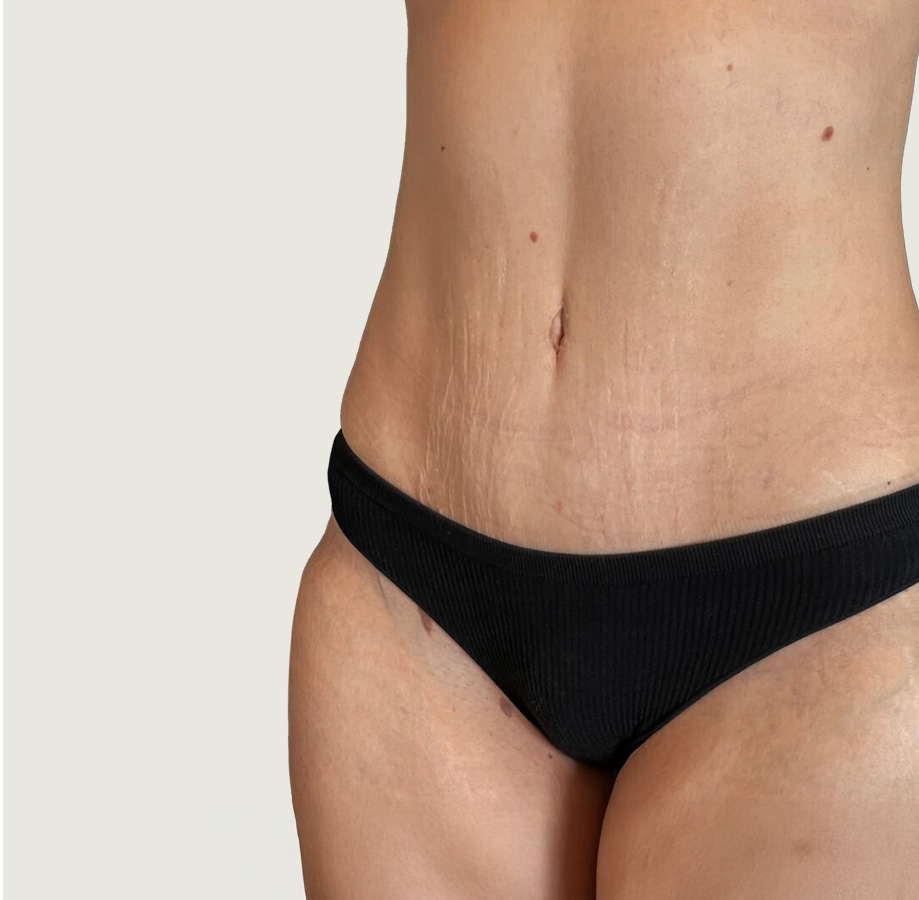
Abdominoplasty is a cosmetic procedure that tightens loose abdominal skin, which often occurs after significant weight loss and/or pregnancy. The purpose of the surgery is to tighten the abdominal skin and remove excess tissue. If there is laxity in the abdominal muscles, these are also tightened (abdominal wall repair). The navel is preserved. The procedure may be combined with liposuction.
“I felt safe throughout the entire process, and the result was both natural and beautiful. I couldn’t be more satisfied – definitely a recommendation from me.”
Bodycontouring | BBL
When you arrive, a nurse will assign you a bed. The surgeon who will be performing the operation will then come to greet you, and depending on the type of anesthesia, you will also meet with an anesthesiologist. There may be a wait of 30 minutes to 1½ hours from your arrival until the surgery begins.
An incision is made low on the abdomen above the pubic area and extending toward the hip bones, depending on how much loose skin is present. The navel stalk is released. The skin and underlying tissue are loosened up to the ribcage. Excess skin and tissue are removed. At the same time, an abdominal wall repair is performed if needed (the muscles are tightened internally from the ribcage down to the pubic bone with nylon sutures). Finally, a new “opening” is created for the navel.
The operation can be extended around the entire waistline to also remove loose skin on the lower back and at the same time lift the buttocks. The procedure lasts 1–3 hours.
Depending on the degree of skin laxity, the operation may be limited to only reaching the navel, which is then left untouched (mini abdominoplasty). The procedures can, if needed, be combined with liposuction. The incisions are sutured fairly tightly and covered with dressings. To prevent infection, a penicillin-like antibiotic is administered.
In some cases, drains will be placed. This means that one or more small plastic tubes are connected to the abdominal area, allowing excess fluid and blood to drain into a bag. At the end of the procedure, a firm, high-compression garment in the form of a high-waisted binder without legs is applied. It is fastened with Velcro and hooks. Often, the bladder will be emptied immediately after the procedure in the operating room by a so-called single-use catheterization. For a very extensive procedure, it may be necessary to place a bladder catheter for the first 24 hours.
Before the surgery, you will have a consultation with the specialist. Here you will be informed about the procedure, possible long-term effects, and potential complications. During the consultation, “before and after” photos will be shown so you can get a realistic impression of the expected cosmetic result.
A good result requires that you are not overweight. Overweight patients must lose weight before surgery. Smokers must stop smoking 2 weeks prior to the scheduled surgery. Both overweight and smoking significantly increase the risk of complications.
If the procedure is performed following a bariatric surgery, at least 18 months must have passed since the weight-loss surgery, and your weight should have been stable for about 6 months. This ensures that your metabolism has stabilized and reduces the risk of complications. You are welcome to bring a friend or family member with you to the consultation.
There must be at least one week between the consultation and the surgery if the procedure is considered to be solely cosmetic.
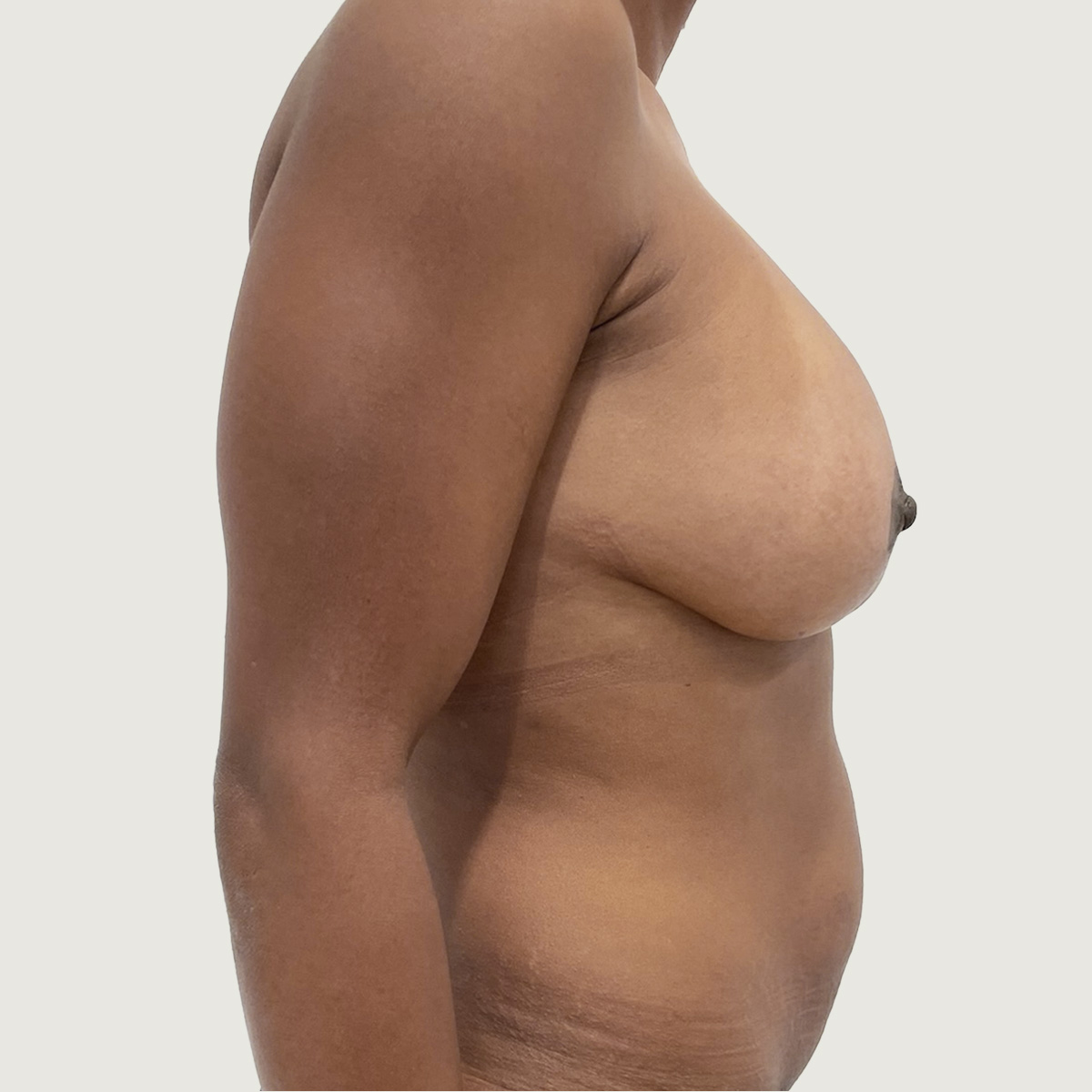
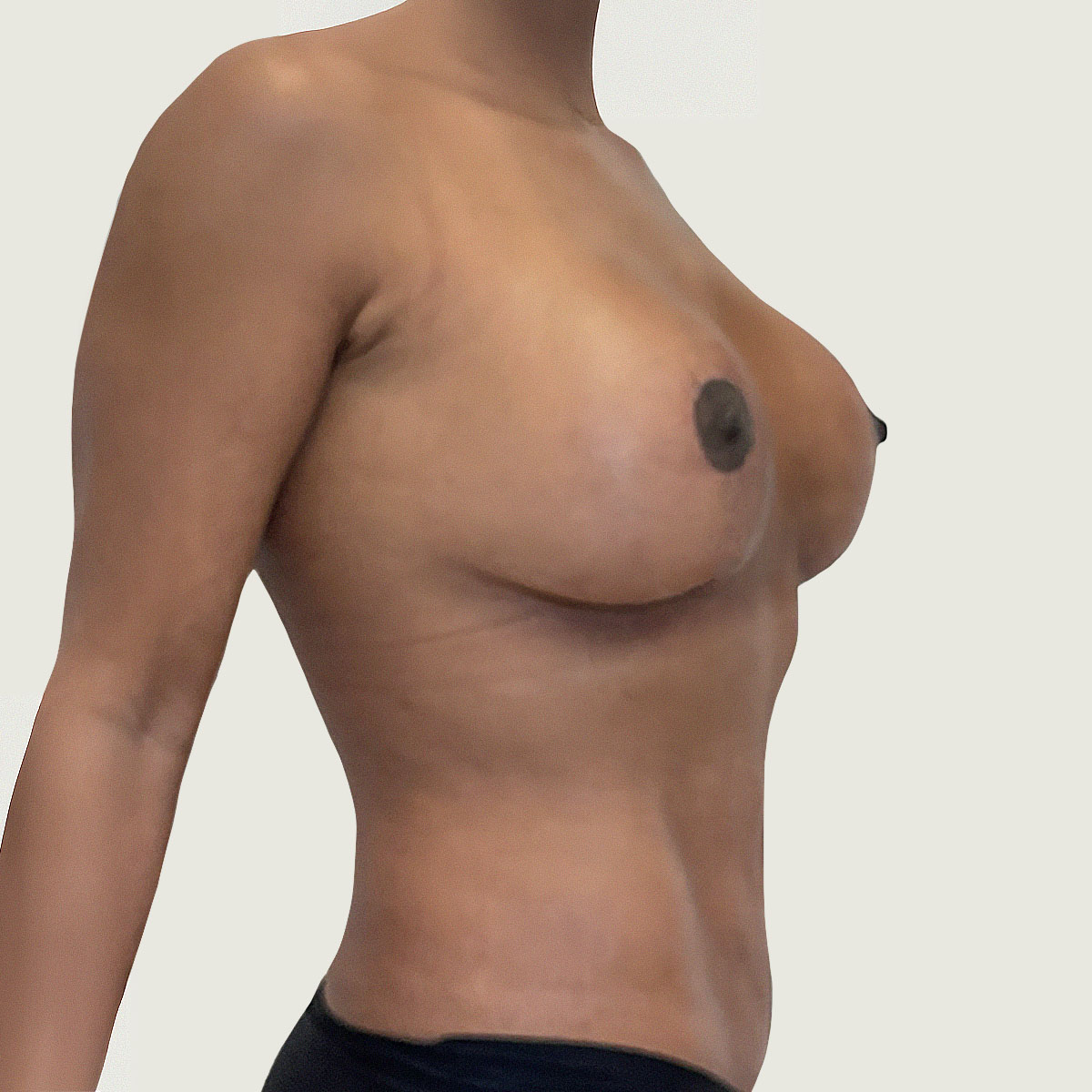
Our before-and-after photos speak louder than words. Here, you gain an honest insight into how small adjustments can make a big difference – both in appearance and confidence.
Here you will find answers to the most common questions about high definition treatment
Before the operation, you must attend a consultation with the specialist. Here you will be informed about the procedure, possible aftereffects, and potential complications. During the consultation, “before and after” photos will be shown so you can get a realistic impression of the expected cosmetic result.
A good outcome requires that the patient is not overweight. Overweight patients must lose weight before surgery. Smokers must stop smoking 2 weeks before the planned operation. Both overweight and smoking significantly increase the risk of complications.
If the procedure is performed after so-called bariatric surgery (post-bariatric surgery), at least 18 months must have passed since the weight-loss operation, and the weight should have been stable for about 6 months. This ensures that the patient’s metabolism has stabilized and minimizes the risk of complications.
You are welcome to bring a friend or family member to the consultation.
There must be at least one week between the consultation and the surgery if the procedure is considered purely cosmetic.
When you arrive, a nurse will assign you a bed. Afterwards, the surgeon who will perform your operation will come and greet you, and depending on the type of anaesthesia, you will also meet the anaesthesiologist.
It may take between 30 minutes and 1½ hours from arrival until the operation begins.
An incision is made low on the abdomen above the pubic bone and across the hip bones, depending on how much loose skin there is. The navel stalk is freed, and skin and subcutaneous tissue are loosened up to the ribcage. Excess skin and subcutaneous tissue are removed. At the same time, an abdominoplasty is performed if needed (the abdominal muscles are tightened internally from the ribcage down to the pubic bone using a nylon suture). Finally, a new “hole” is made for the navel.
The operation can be extended all the way around at waist level to also remove loose skin on the lower back and simultaneously lift the buttocks. The procedure lasts 1–3 hours.
Depending on the degree of skin laxity, the operation can be limited to just below the navel, in which case the navel is not affected (a mini-abdominoplasty). If needed, the procedures can be combined with liposuction. The incisions are closed fairly tightly and covered with dressings. To prevent infection, a penicillin-like drug is administered.
In some cases, drains will be placed. This means that one or more small plastic tubes are connected to the abdominal area to allow excess fluid and blood to drain into a collection bag. At the end of the operation, a high-compression garment in the form of high-waisted pants without legs is applied. It closes with Velcro and hooks. Often, the bladder is emptied immediately after the operation in the operating room via a so-called single-use catheterisation. In the case of a very extensive procedure, it may be necessary to place a bladder catheter for the first 24 hours.
During the first hours after the operation, your heart rhythm, breathing, etc. will be electronically and personally monitored. As soon as you are fully awake and able, you may get up with the help of a nurse and go to the toilet.
Just before discharge, any drains will be removed. There is a small risk that you may be discharged with drains if the surgeon considers it too early to remove them on the day of discharge.
Hospitalisation is typically 1–2 days depending on the type of operation. If it concerns a small excess of skin limited to the lower abdomen (mini-abdominoplasty), you are usually only hospitalised for half a day.
Recovery timeline:
Week 1. Rest, but not complete bed rest. You should walk a little around at home. No cleaning, shopping, long cooking, etc. If you have small children, you must expect help with them.
Week 2. Gradually increase activity level. You may take short walks, do light shopping, and light housework. You may start driving again.
Week 3. You can start cycling and return closer to normal activity levels, except for fitness, running, sports, etc. These should be postponed for about 6–8 weeks. If abdominoplasty (tightening of abdominal muscles) has been performed, heavy lifting and abdominal training should be avoided for 6–9 months.
The abdominal skin cannot tolerate greater strain during the first 6–8 weeks, which is why sexual activity should be adjusted accordingly. If you are used to exercising a lot, you should reduce your calorie intake until you are back at full activity level to avoid weight gain.
If stitches need to be removed, this happens around day 10–12. A follow-up is offered after 3–6 months. Time for possible stitch removal is provided at discharge. You must call Copenhagen Private Hospital to book a follow-up appointment.
The result lasts for many years, but naturally the tissue will follow the usual ageing process.
Upon discharge, you will be given pain medication as well as the surgeon’s phone number.

The operation is performed under general anaesthesia and may last from 1–3 hours. Please read the separate information brochure about anaesthesia.
The hairline above the pubic bone may be slightly raised, as a large amount of skin is removed during the procedure.
Actual complications are rare (less than 2%). These may include blood collections requiring surgery, infection, or a blood clot in a vein in the leg (to reduce this risk, support stockings and possibly anticoagulant medication are provided). Contact the operating surgeon or the hospital if you experience severe pain.
There is mild pain in the first few days, depending on the extent of the surgery. Tenderness can be expected for 2–5 weeks, depending on the scope of the procedure. After the operation, the skin will be discolored and swollen for 2–3 months. The final result can only be assessed after 3–6 months.
The scars are permanent and are often somewhat wider and placed higher than scars after a C-section, as there is much greater tension on these scars. The operation leaves a scar around the navel, as well as a horizontal scar above the pubic area (bikini line). If the skin is very loose before surgery, a vertical scar stretching from the chest down to the pubic area may also be left in rare cases.
In some cases (mini tummy tuck), only a scar above the pubic area (bikini line) will be left. Scar maturation takes about 18 months, and you should avoid sun exposure on the scar during the first year. If needed, use sunscreen with SPF 10 or higher.
After the operation, there may be sensory disturbances in the operated area. Most often, this will involve reduced sensation in the area below the navel and above the pubic bone. The sensory disturbance will typically disappear after 3–6 months, but in some patients, it may be permanent. After a full tummy tuck, there will be permanent sensory disturbances just above the scar.
In rare cases, bleeding may occur within the first 24 hours after the operation and may require surgical intervention. If bleeding occurs, it will often appear within the first few hours after surgery and present as increasing swelling and pain. The patient will then be taken to the operating room for a minor procedure under general anaesthesia.
Occurs very rarely. However, you should contact us if you develop fever, redness, warmth, or pain around the scar tissue.
In the postoperative period, fluid buildup under the skin may occur in rare cases. This is called a seroma. If you experience significant swelling, you should contact the operating surgeon, who will be able to drain any excess fluid.
Tissue loss after the operation is extremely rare but can occur, especially if the no-smoking rule is not observed. A serious complication may require scar correction and, in some cases, a skin graft.
If the result does not meet expectations, a new operation may be considered. However, it is not always possible to operate to achieve a more satisfactory outcome.
You are always welcome to contact us. We are ready to answer your questions and help you move forward if you need guidance.