Breast Surgery
Breast Surgery
Breast Surgery

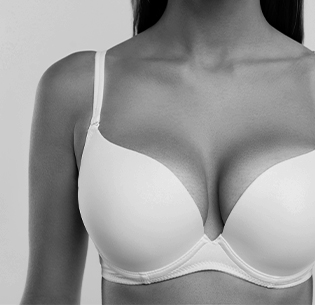
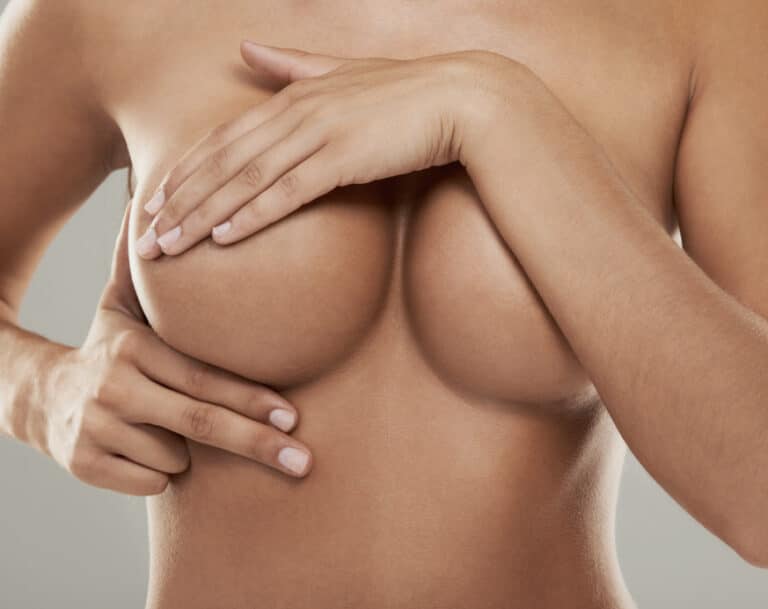
Breast augmentation with implants

By inserting implants, increased volume is achieved and, in some cases, a more harmonious shape.

Breast implantation can be performed alone or combined with a breast lift and/or fat transfer to achieve the best cosmetic result.

Breast augmentation

If you already have breast implants, are still happy with them, but wish to correct your breast shape, a breast lift or fat transfer without removing the implants may be an option. If you have implants and wish to replace or remove them, it is possible to exchange the implants for a different size and shape, possibly combined with a breast lift or fat transfer. Finally, some women choose to replace breast implants entirely with their own fat tissue. Which treatments can give you the best result can be discussed during a consultation.

If you are considering a breast augmentation or revision surgery, or if you have any questions, you are always welcome to call and book a consultation with me.

A breast implant consists of silicone gel surrounded by a thick elastic silicone shell with a smooth or textured surface. The content is silicone gel. Implants can be round or teardrop-shaped. Modern implants last for many years – and do not need to be routinely replaced after 10 years. As long as you are happy with your breast shape and experience no problems, there is no reason to have the implants exchanged. However, you should keep in mind that breast implants may necessitate surgery later in life – either to adapt the breasts to natural age-related changes or if problems occur.

All Mentor silicone implants come with a lifetime product warranty. If an implant ruptures, you will receive new implants if you wish. However, you must pay for the operation yourself. If an implant ruptures within 10 years, you will also receive 1,000 euros as a contribution towards the surgery costs.

Before the surgery

Before the surgery, you will attend a consultation. Here, I will examine you and take measurements of your breasts. You will be informed about the different types of breast implants, the procedure itself, possible late effects, and potential complications. Based on your expectations and the clinical examination, we will plan which implant type and size are best suited for you, and whether you might also benefit from a small additional breast lift or fat transfer. I will show you before/after photos of other patients so you can get a realistic impression of the expected cosmetic result.

You are welcome to bring a friend or family member to the consultation. There must be at least one week between the consultation and the surgery if the procedure is considered purely cosmetic.

If you are over 45 years old or genetically predisposed to breast cancer, you should have a mammography screening and possibly an ultrasound scan of the breasts no later than 14 days before the planned surgery. After any breastfeeding period, breast size must have been stable for at least 3 months before surgery can be performed.

Sculpture by plastic surgery treatments

Before / After

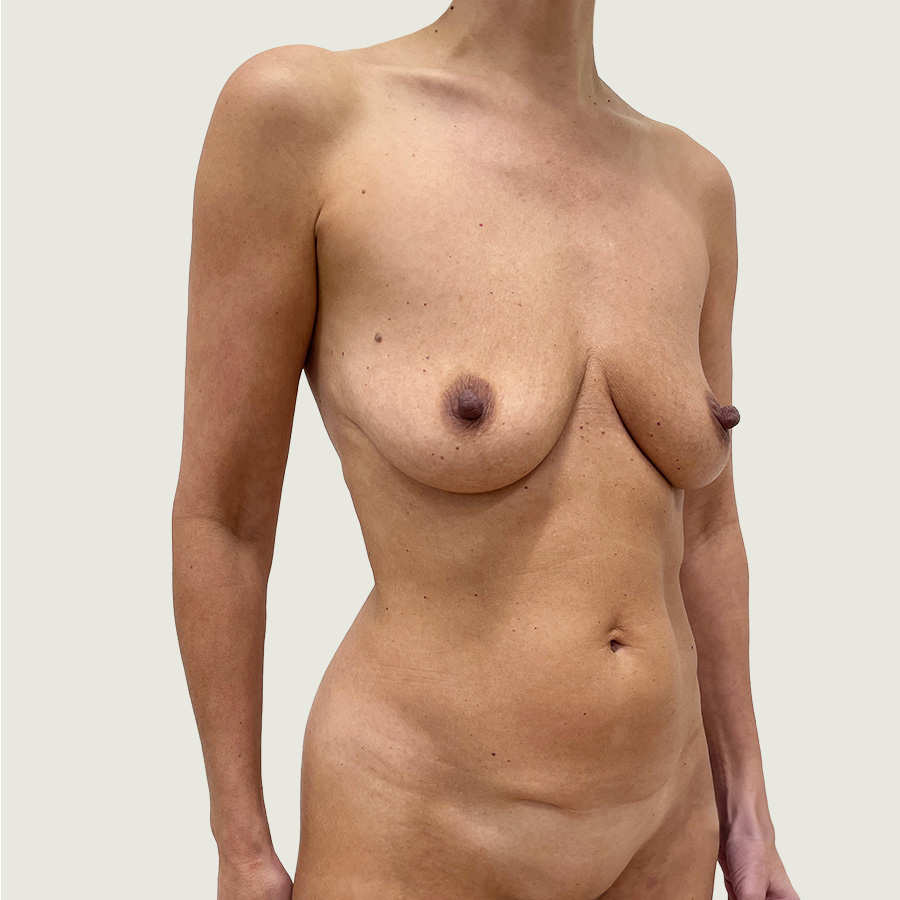
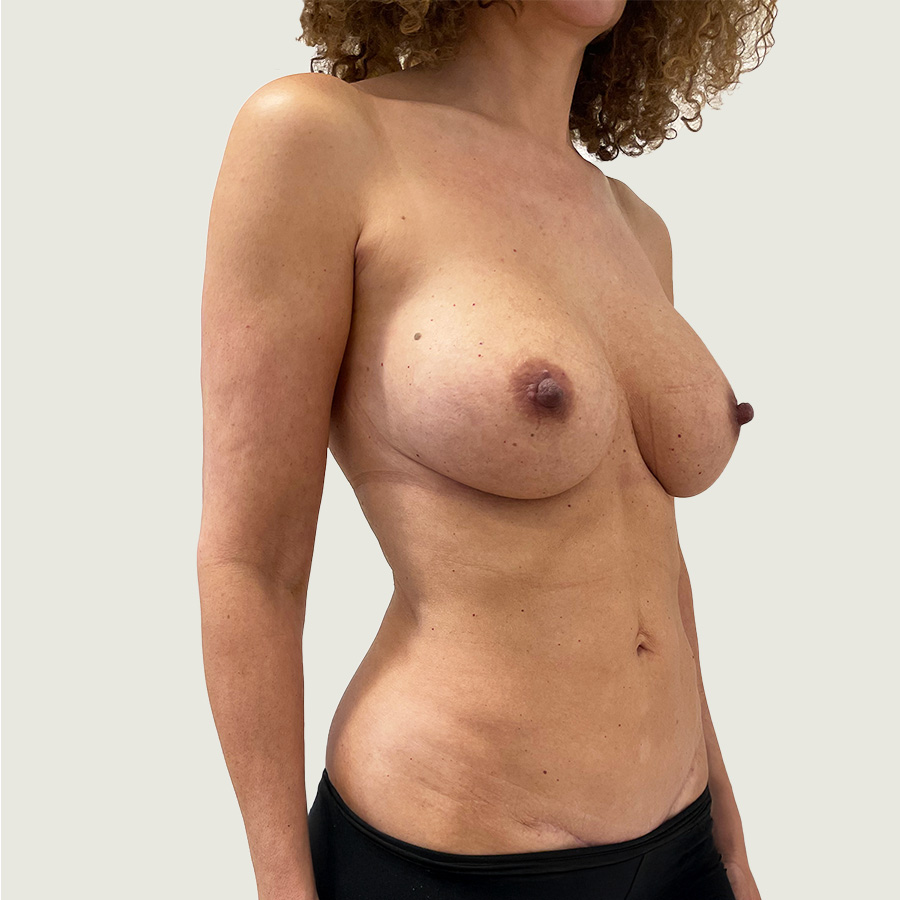
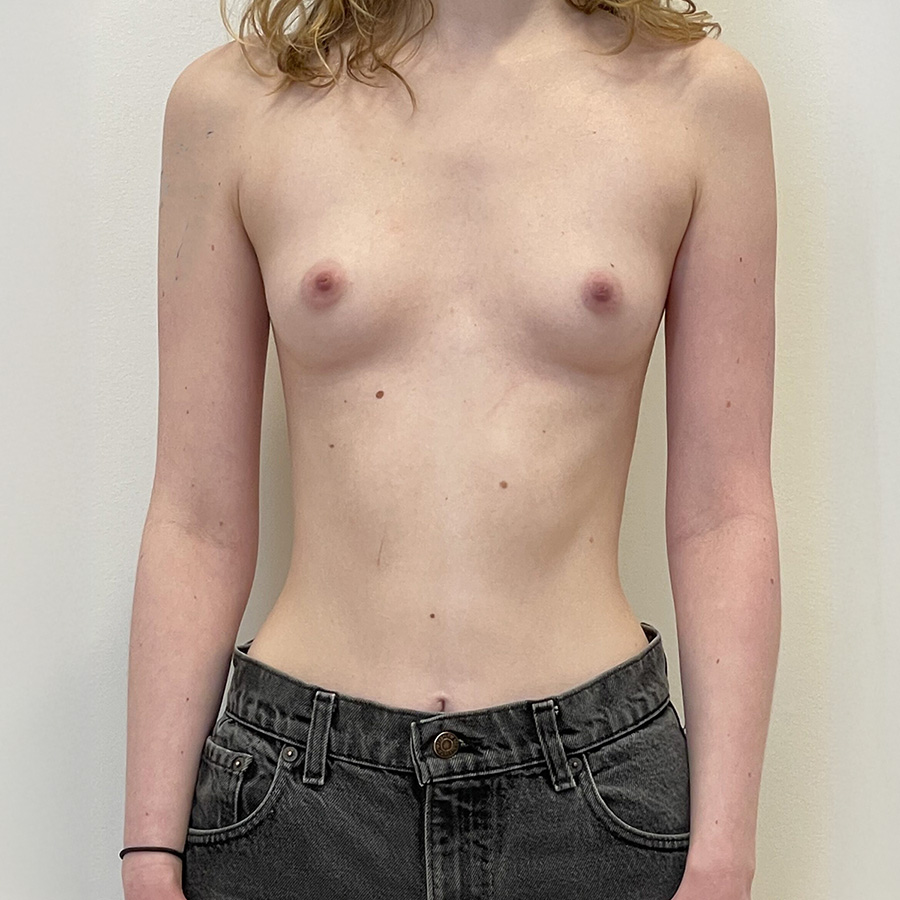
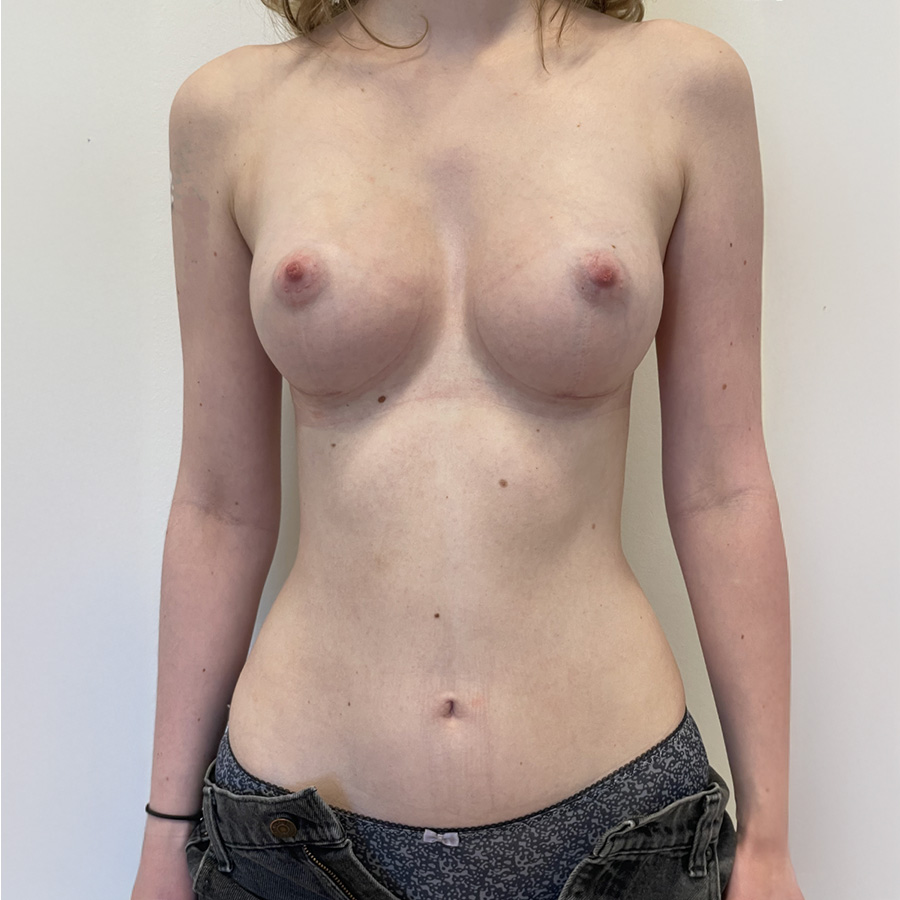
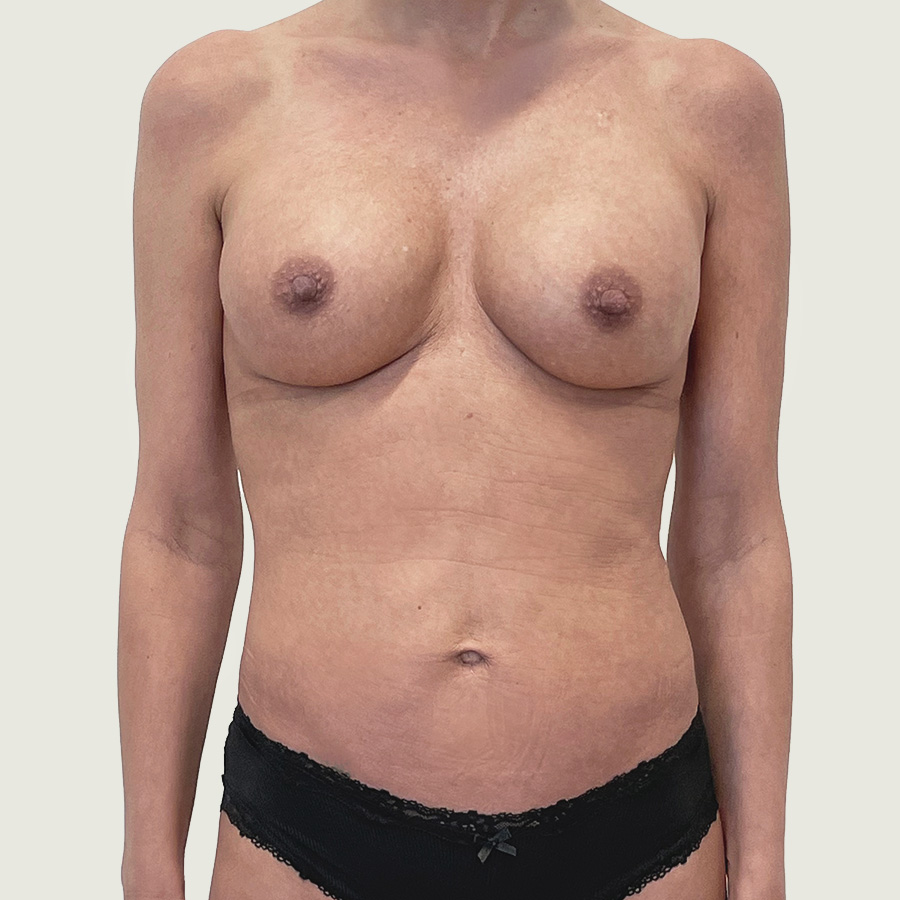
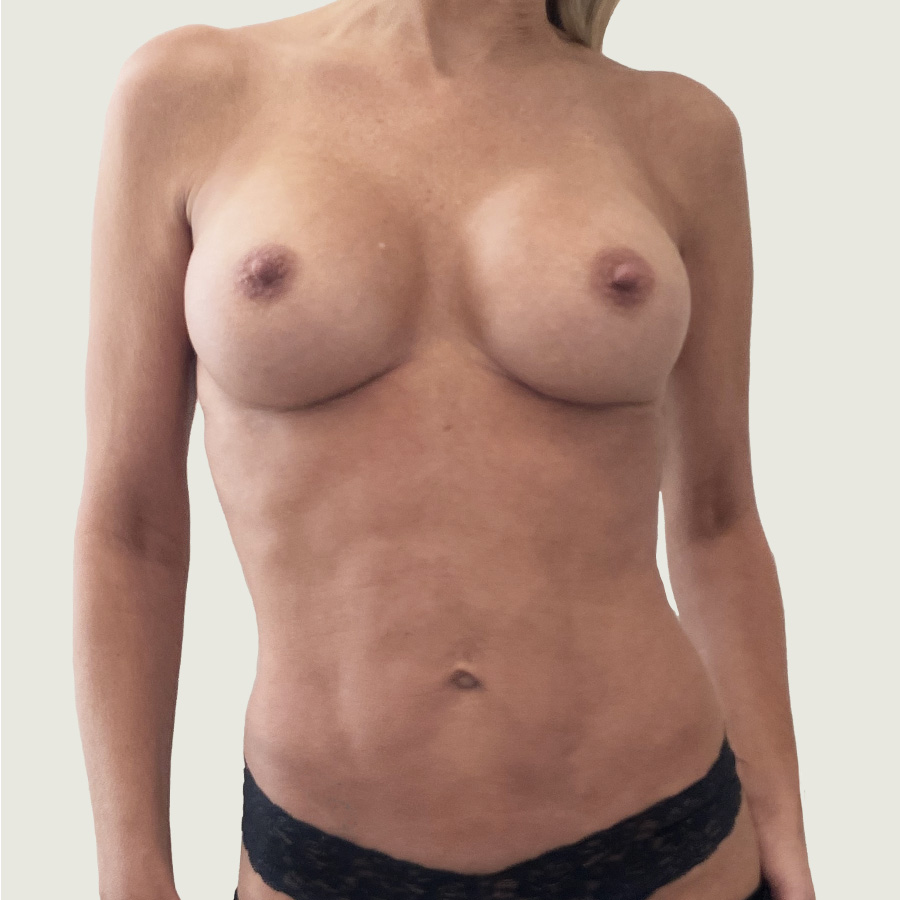
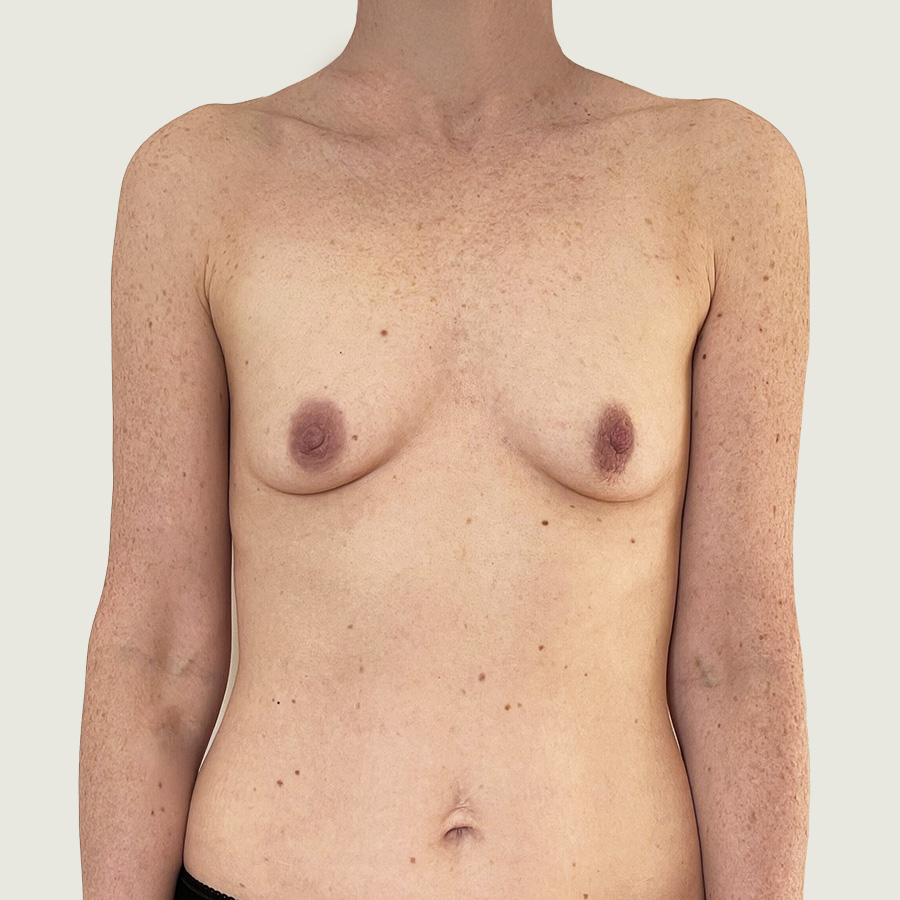
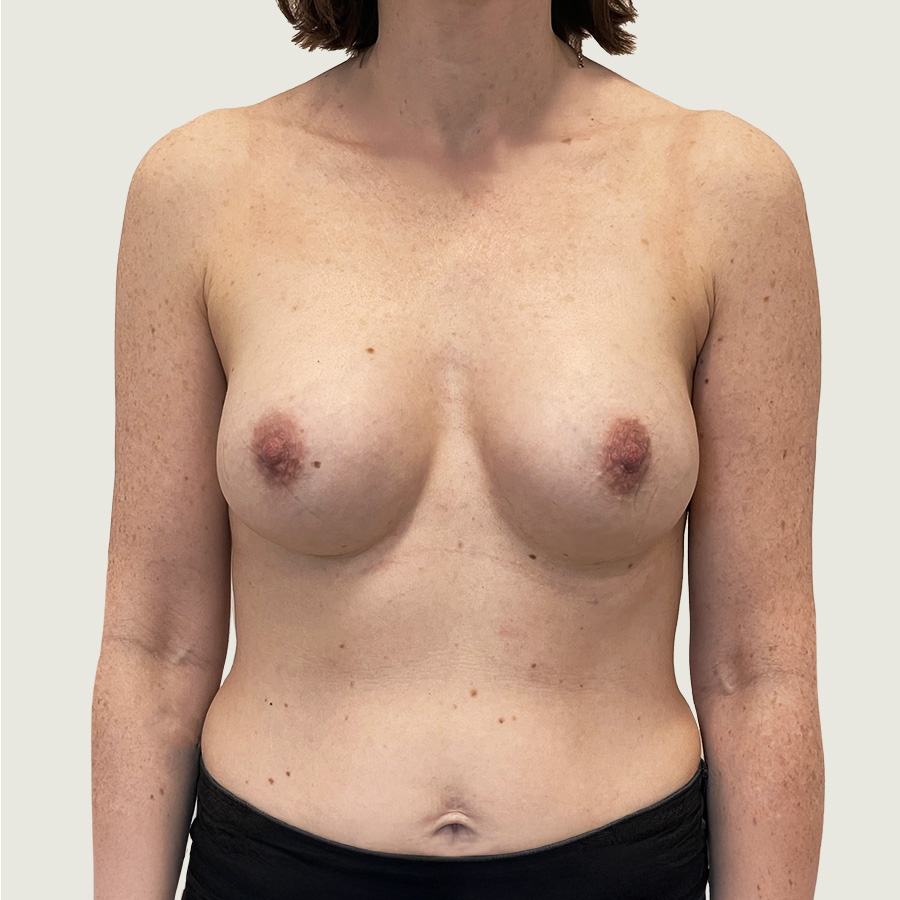
Our before-and-after photos say more than words. Here you get an honest insight into how small adjustments can make a big difference – both in appearance and in confidence.

Before Breast augmentation with implants
After Breast augmentation with implants
Drag to compare

Breast augmentation with implants

Performed by: Trine Henriksen

Before Breast augmentation with implants
After Breast augmentation with implants
Drag to compare

Breast augmentation with implants

Performed by: Trine Henriksen

Breast augmentation with implants before
Breast augmentation with implants after
Drag to compare

Breast augmentation with implants

Performed by: Trine Henriksen

Before Breast augmentation with implants
Breast augmentation with implants after from front
Drag to compare

Breast augmentation with implants

Performed by: Trine Henriksen

Frequently Asked Questions

Find answers to the most common questions about the treatment.

Before the surgery

Before the surgery, you will attend a consultation. Here, I will examine you and take measurements of your breasts. You will be informed about the different types of breast implants, the surgery, possible late effects, and potential complications. Based on your expectations and the clinical examination, we will plan which implant type and size are best suited for you, and whether you might also benefit from a small additional breast lift or fat transfer. I will show you before/after photos of other patients so you can get a realistic impression of the expected cosmetic result.

You are welcome to bring a friend or family member to the consultation. There must be at least one week between the consultation and the surgery if the procedure is considered purely cosmetic.

If you are over 45 years old or genetically predisposed to breast cancer, you should have a mammography screening and possibly an ultrasound scan of the breasts no later than 14 days before the planned surgery. After any breastfeeding period, the size of the breasts must have been stable for at least 3 months before surgery can be performed.

When you arrive, you will be received by a nurse. Afterwards, you will speak with me and an anaesthesiologist. The surgery lasts about 1 hour. The insertion of the implants can be done in several ways: through an incision in the armpit, an incision at the edge of the areola, or an incision in the fold beneath the breasts. The last method is the most commonly used, and it is the one we most often recommend. The implants are usually placed behind the pectoral muscle. If the breasts sag slightly, it may be possible to use a teardrop-shaped implant, which lifts the breast a little and thereby avoids the need for a breast lift. However, if the breasts sag significantly, you must expect that a breast lift may also be necessary. During the operation, antibiotics are given to prevent infection. To reduce pain after the surgery, a local anaesthetic is placed in the pocket where the implant is inserted. The wound is closed in several layers and covered with a plaster. A dressing is then applied on top.

In the first hours after surgery, your heart rate, breathing, and other vital signs will be monitored. The dressing is removed before discharge, and you will be fitted with a bra. Upon discharge, you will be given pain medication. You will have scheduled follow-up appointments 2 weeks and 3 months after the surgery, and after that you may book a check-up at any time if you wish. It is recommended that you wear a bra day and night for 6 weeks until the implants have “settled”. Breast implants rarely affect the ability to breastfeed.

SPORT AND EXERCISE: Can be resumed after 4–6 weeks. However, avoid major shoulder movements for 6 weeks after the surgery, such as tennis or breaststroke swimming.

SUN EXPOSURE: Avoid sun for 2 weeks after the surgery. The scars must then be protected for one year after the surgery with plaster or a bra if you sunbathe.

WORK: You should expect to take 1–2 weeks off work after the surgery, depending on how physically demanding your job is.

The surgery is performed under general anaesthesia.

A diagnostic mammography can usually be performed if the breast implants are placed behind the pectoral muscle. However, there will be cases where this is not possible, such as in women with pronounced capsular contracture around the implants and in women with very large implants relative to their breasts. In women where the implant is placed in front of the muscle, it is not possible to perform a fully satisfactory screening mammography.

In very rare cases, an implant may rupture during a mammography.

Ultrasound scanning of the breasts in women with breast implants is possible, but the examination is more difficult to interpret if the implants are placed in front of the muscle.

If the breast implants are placed behind the pectoral muscle, this may in some patients cause deformity of the breast when using the muscle.

Pain: You will feel pain and tenderness in the pectoral muscle for 1–2 weeks. In most cases, the silicone implant cannot be felt. However, slim women may be able to feel the edge of the implant at the side and beneath the breast, which is of no significance.

The surgery leaves a scar of about 4 cm. The scar is permanent but is usually light and narrow like a line. In some patients, the scar may become wider and more darkly pigmented. The scar is placed as much as possible in the fold beneath the breast, but in some cases it may be positioned slightly higher or lower.

Sensory disturbances in the breast and nipple usually disappear within 2–6 months but may, in rare cases (less than 1%), be permanent. Breast implantation rarely affects the ability to breastfeed.

If the result does not meet expectations, a new operation may be considered. However, it is not always possible to achieve a more satisfactory outcome through surgery.

What you should also be aware of:

CAPSULAR CONTRACTURE: When a breast implant is inserted, scar tissue will always form around the implant. This is part of the body’s natural foreign-body reaction. In some patients, the scar tissue may contract, known as capsular contracture, making the breast firmer and possibly changing its shape. Smoking or having undergone several surgeries increases the risk of capsular contracture. If contracture causes problems, it may be necessary to operate to remove all or part of the capsule.

At Søernes Privathospital, we offer a 5-year capsule guarantee, which means that if you need surgery due to capsular contracture within 5 years, we provide the surgery free of charge.

RUPTURE & SILICONE LEAKAGE: If a breast implant ruptures, the silicone gel usually remains inside the scar tissue capsule that the body has formed around the implant. If a ruptured implant is left in place for a long time, silicone may in rare cases seep into the armpit or breast tissue. It has not been scientifically proven that silicone causes connective tissue disease or breast cancer, but pain and other tissue reactions may occur. You should therefore seek a check-up if you experience problems in the breast.

ASYMMETRY: Many women naturally have asymmetrical breasts. During surgery, the surgeon aims to achieve the greatest possible symmetry. However, there is a risk that complete symmetry cannot be achieved.

BLEEDING: In rare cases, blood accumulation may occur within the first 24 hours after surgery. If bleeding occurs, it will be seen as increasing swelling and pain. The blood accumulation will be removed surgically under general anaesthesia.

INFECTION: Infection is rare (in less than 1%). You should seek medical attention if you develop redness, swelling, warmth, and pain in the breast. Skin infection can be treated with penicillin. In case of infection around the implant, it may be necessary to remove the implant and wait at least 3 months before inserting a new one.

SWELLING: In rare cases, prolonged swelling and fluid accumulation (seroma) in the breast can occur. If the swelling persists, it may be necessary to remove the implant for a period.

BIA-ALCL: In extremely rare cases, fluid accumulation or lump formation related to the capsule may be caused by a very rare form of non-Hodgkin lymphoma (BIA-ALCL). Approximately 800 cases have been registered worldwide out of more than 30 million women with breast implants (9 cases in Denmark). The condition is treated by removing the implant along with the capsule surrounding it. It is important that you seek medical attention if you develop swelling, lump formation, enlarged lymph nodes, or anything else not related to the expected recovery after surgery.

Other risks: Since the 1980s, many large studies have been conducted to investigate and document the safety of various breast implants on the market. Research is ongoing into possible links between breast implants and connective tissue diseases or symptoms such as fatigue and joint pain. There is no scientific evidence that breast implants cause connective tissue diseases, but a small group of women develop non-specific symptoms and experience improvement after implant removal, despite not having an active connective tissue disease. Breast Implant Illness (BII) is used as a collective term for symptoms that some women relate to their implants. Many of the symptoms, such as chronic fatigue, hair loss, joint and muscle pain, and skin rashes, can, however, be caused by many different conditions and diseases. Therefore, there is no guarantee that removing the implants and the capsule around them will alleviate symptoms, and it is important to be examined for other underlying causes. If systemic symptoms are suspected to be associated with the implants, the implants are removed together with the capsule tissue (scar tissue around the implants).

Do you still have questions?

You are always welcome to contact us. We are ready to answer your questions and help you move forward if you need guidance.