Replacement or removal of implants and possibly capsule
The vast majority of women with breast implants are happy with them for many years.
However, there may be a need to replace or remove the implants, either for cosmetic reasons or if problems arise. For some women, it is relevant to remove the implants either because of implant-related issues, because they wish to exchange them for a different size, or to replace them with fat tissue – or simply because, due to changes in body shape or age, they no longer wish to have implants.
“I felt safe throughout the entire process, and the result was both natural and beautiful. I could not be more satisfied – definitely a recommendation from me.”
Bodycontouring | BBL
Replacement or removal of implants may be relevant
Previously, it was recommended to replace implants after 10 years, but international consensus is that they do not need to be replaced if you are still happy with them and experience no problems.
If there is a change in breast shape, for example sagging after pregnancy, weight changes, or due to natural ageing, it may be relevant for some to replace or remove implants, while others – if they wish – can keep the implants and have correction in the form of a breast lift or fat transfer.
In case of changes in breast size and shape
Leakage of a breast implant (implant rupture)
Capsular contracture or displacement of implants
If you no longer wish to have breast implants
If you want a different size or type of breast implant
If you experience physical discomfort
Replacement can, if desired, be combined with a breast lift or fat transfer. When implants are removed, a breast lift and/or fat transfer can also be performed. If you wish to replace breast implants with your own fat tissue, this is done in the same operation. Depending on the desired breast size, a supplementary lipoinjection may be necessary at a later stage. Which treatments can give you the best result can be discussed during a consultation.
Important to know about breast implants
BIA-ALCL: In extremely rare cases, fluid accumulation or lump formation related to the capsule may be caused by a very rare form of non-Hodgkin lymphoma (BIA-ALCL). Approximately 1,000 cases have been registered worldwide out of more than 30 million women with breast implants (8 cases in Denmark since 1968). The disease is treated by removing the implant together with the entire capsule surrounding it. It is important that you seek medical attention if you develop swelling, lumps, enlarged lymph nodes, or anything else that cannot be explained by the expected course after surgery.
Breast Implant Illness (BII): Since the 1980s, many large studies have been conducted to investigate and document the safety of various breast implants on the market. Research is ongoing into possible links between breast implants and connective tissue diseases and symptoms such as fatigue and joint pain. There is no scientific evidence that breast implants cause connective tissue diseases or neurological disorders, but a small subgroup of women develop non-specific symptoms and experience improvement after removal of the implants and the surrounding capsule.
BII is used as a collective term for symptoms that some women relate to their implants. Many of the symptoms, such as chronic fatigue, hair loss, joint and muscle pain, and skin rashes, can, however, be caused by many different conditions and diseases, and it is important to undergo thorough examination to rule out other underlying causes of the symptoms. If other causes have been excluded, it may be relevant to remove the implants and the scar tissue capsule around them. There may be both a psychological and a physical effect from having the implants and capsule removed if BII is suspected, but there is no guarantee that this will relieve the symptoms.
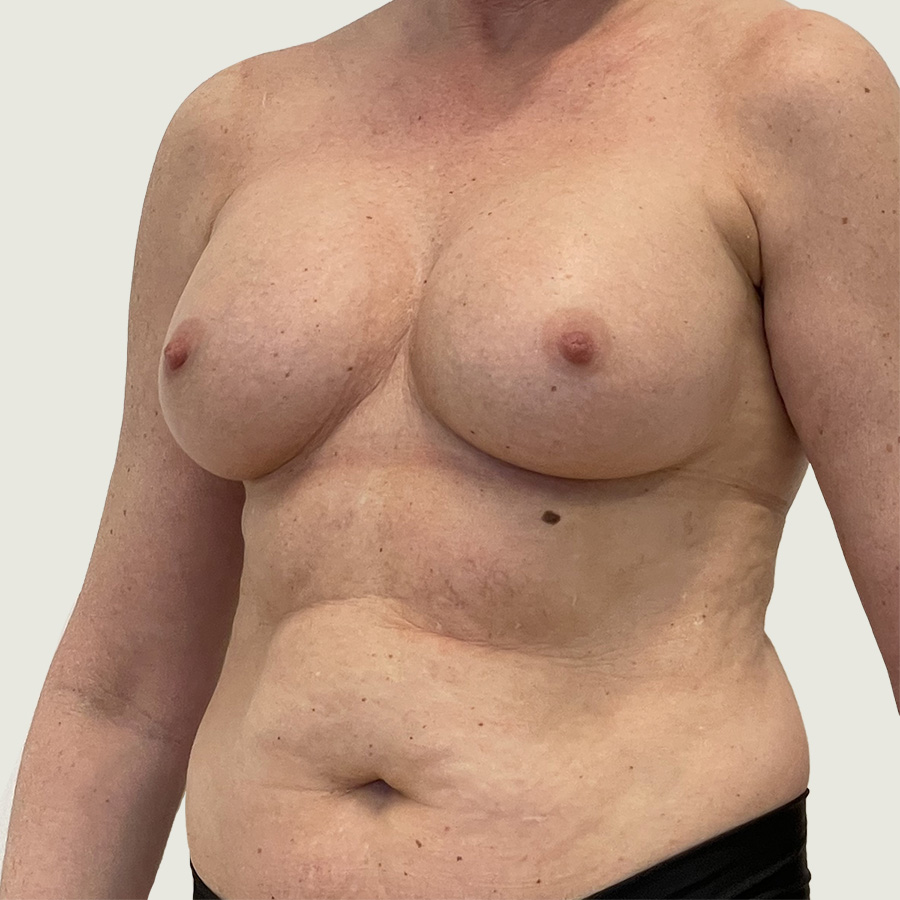
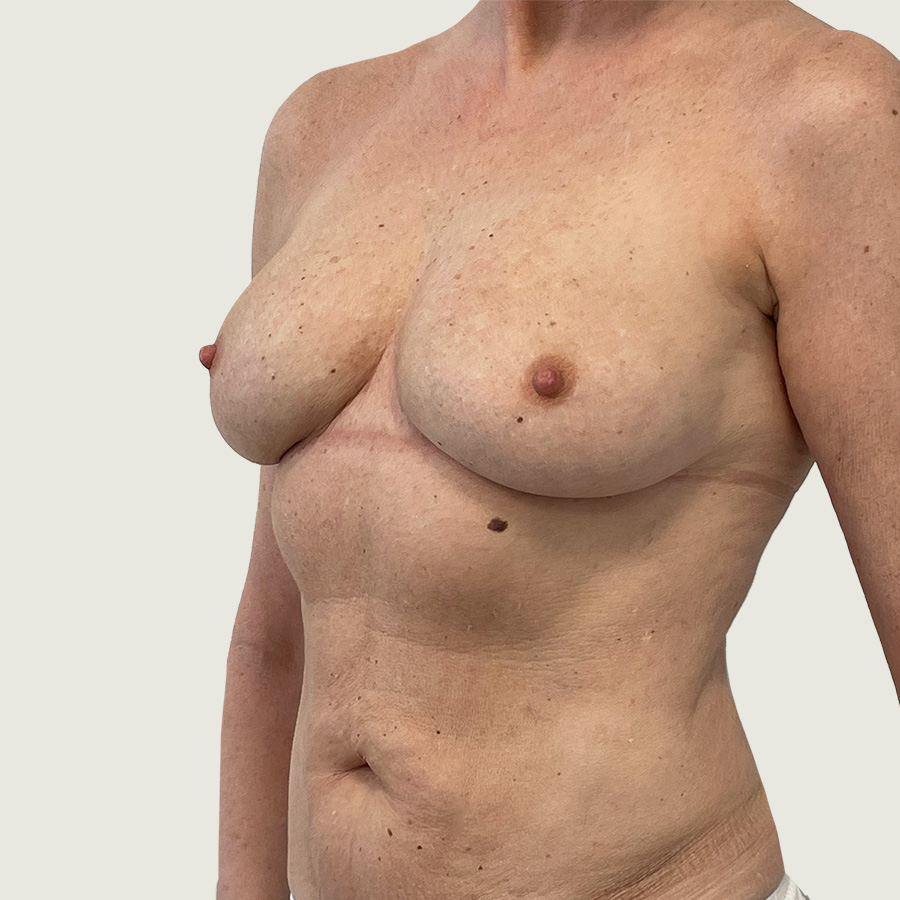
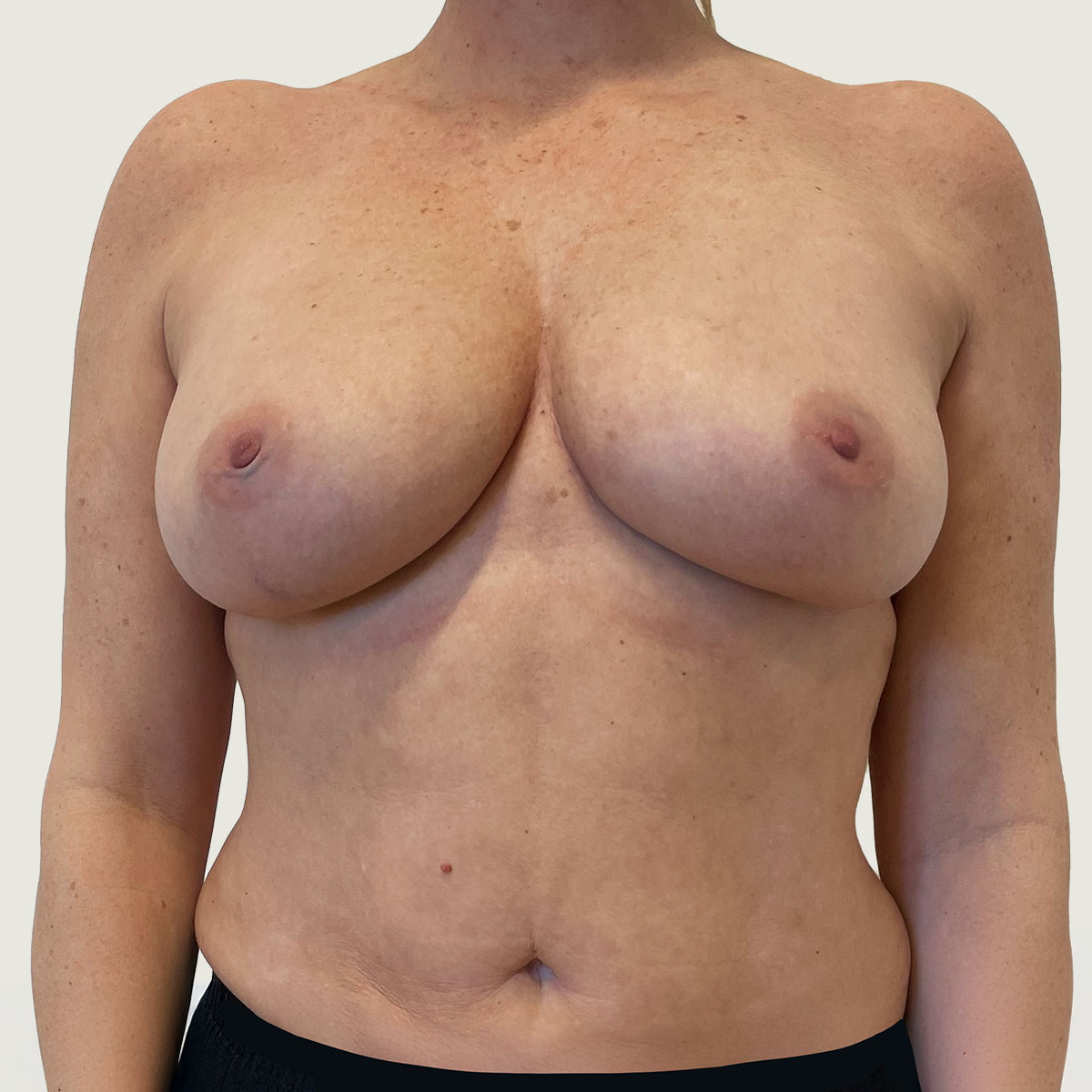
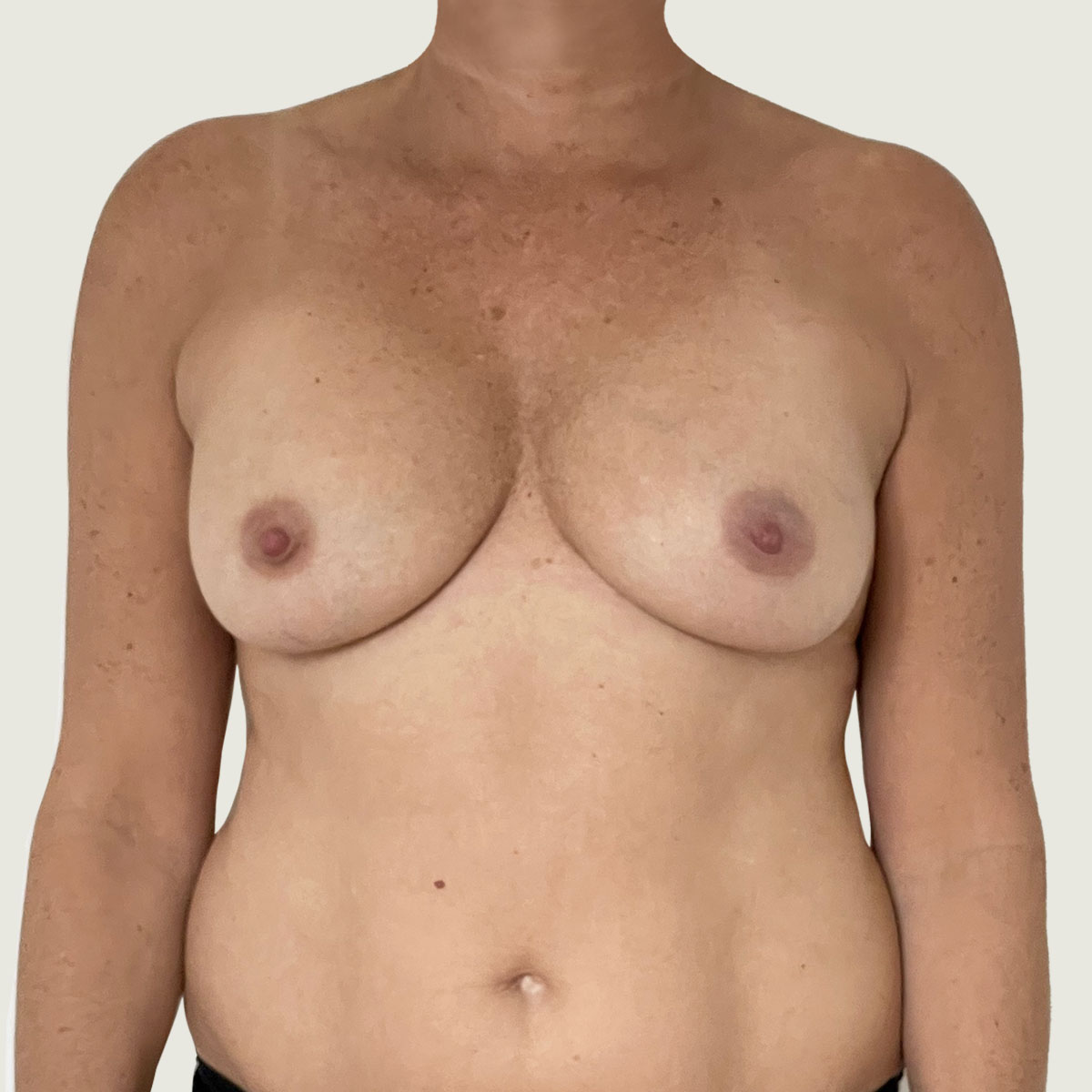
Before / After
Our before-and-after photos say more than words. Here you get an honest insight into how small adjustments can make a big difference – both in appearance and in confidence.
Replacement or removal of implants and possibly capsule
Performed by: Trine Henriksen
Replacement or removal of implants and possibly capsule
Performed by: Trine Henriksen
Frequently Asked Questions
Find answers to the most common questions about the treatment.
What is the duration of the treatment?
Typically 1–2 hours, depending on whether only implant removal/replacement is performed, or if the procedure is combined with a breast lift and/or fat transfer. If removal of capsule tissue together with the implants is planned, the operation time will be longer.
What is the difference between replacement and removal?
Replacement: The implants are removed and replaced with new ones, possibly of a different size or type.
Removal: The implants are completely removed, possibly combined with a breast lift or fat transfer to maintain or improve the shape.
Who is a good candidate?
Women with changes in breast size or shape
In case of implant rupture (leakage)
In case of capsular contracture or implant displacement
If a different size or type of implant is desired
If implants are to be completely removed due to discomfort or a change in preference
How is the procedure performed?
Depending on the need, the procedure may include:
Removal of implants with or without the surrounding capsule
Replacement with new implants
Combination with a breast lift and/or fat transfer
If the implants are replaced with fat tissue, liposuction and fat transfer are performed in the same operation.
What is the recovery time?
Light activity after 1–2 weeks
Avoid heavy lifting and strenuous exercise for 4–6 weeks
Swelling and tenderness may persist for several weeks
The final result can be seen after 3–6 months.
Are the results permanent?
The result is lasting, but the shape of the breast may change over time due to ageing, weight changes, or pregnancy. Implants may require further replacement at a later stage.
Do you still have questions?
You are always welcome to contact us. We are ready to answer your questions and help you move forward if you need guidance.









 DA
DA