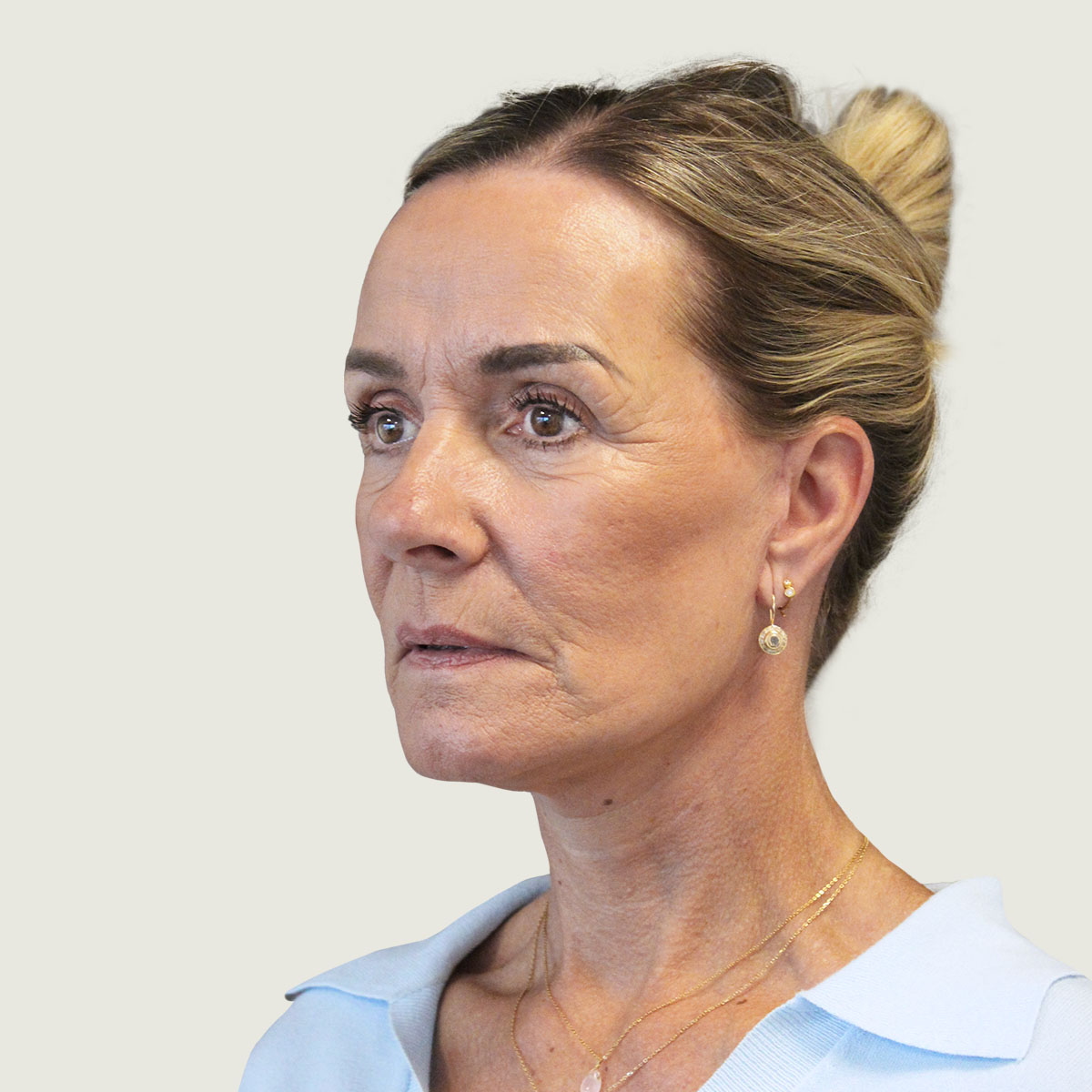
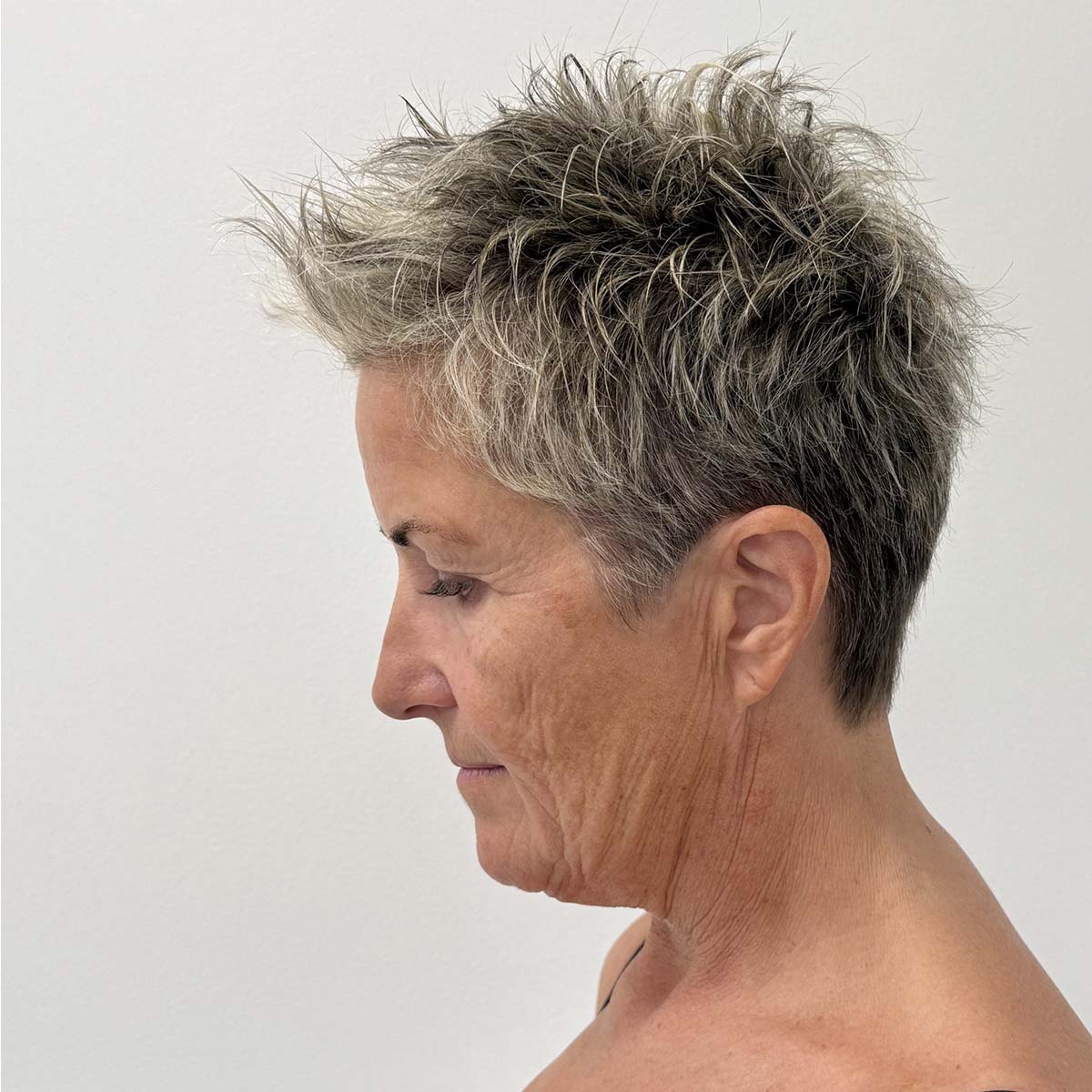
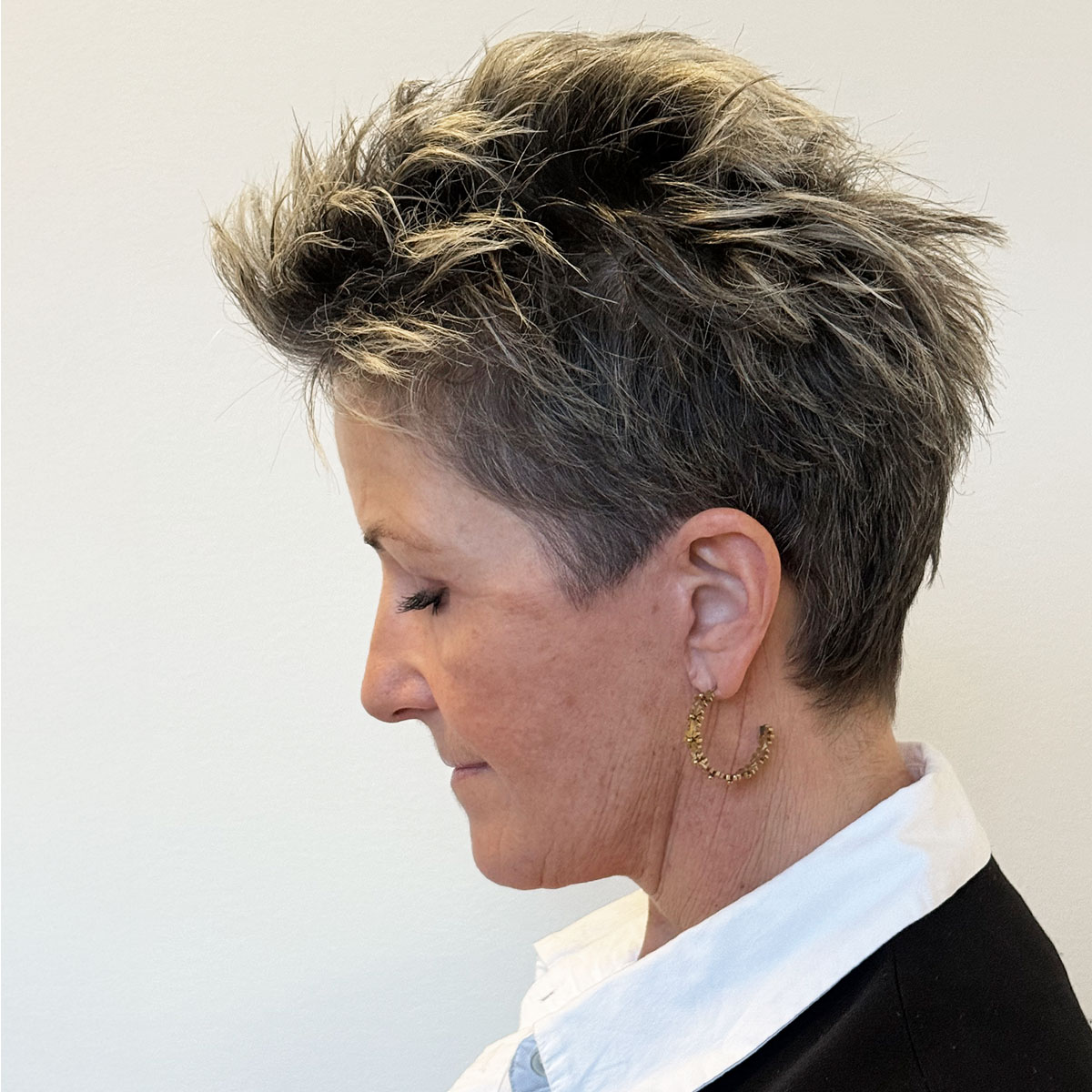
A Deep Plane Necklift is the most advanced method to restore a youthful, harmonious neck and a sharper jawline – entirely without the artificial look that can occur after less advanced surgical techniques. By working with muscles, fat, and connective tissue in the deep layers beneath the skin, we can achieve impressive results that are both natural and long-lasting.
At Sculpture by, this exclusive treatment is offered only by plastic surgeon Louise Vennegaard Mielke, who is among the few in Denmark with specialised experience in deep plane techniques for both the face and neck.
“I felt safe throughout the entire process, and the result was both natural and beautiful. I could not be more satisfied – definitely a recommendation from me.”
Bodycontouring | BBL
Neck lift with natural contour and discreet scars
As we age, the structures of the neck lose their firmness – the skin becomes loose, fat accumulates under the chin, and the neck muscles (particularly the platysma) begin to sag. While traditional neck lifts mainly tighten the skin, a Deep Plane Necklift goes deeper and addresses the actual anatomical causes of the ageing appearance.
With this technique, the platysma muscle – which often causes the characteristic vertical neck bands – is released and repositioned. At the same time, fat deposits under the chin and along the jawline are reduced or repositioned. The skin is carefully adjusted without over-tightening, ensuring a natural-looking result that continues to age harmoniously.
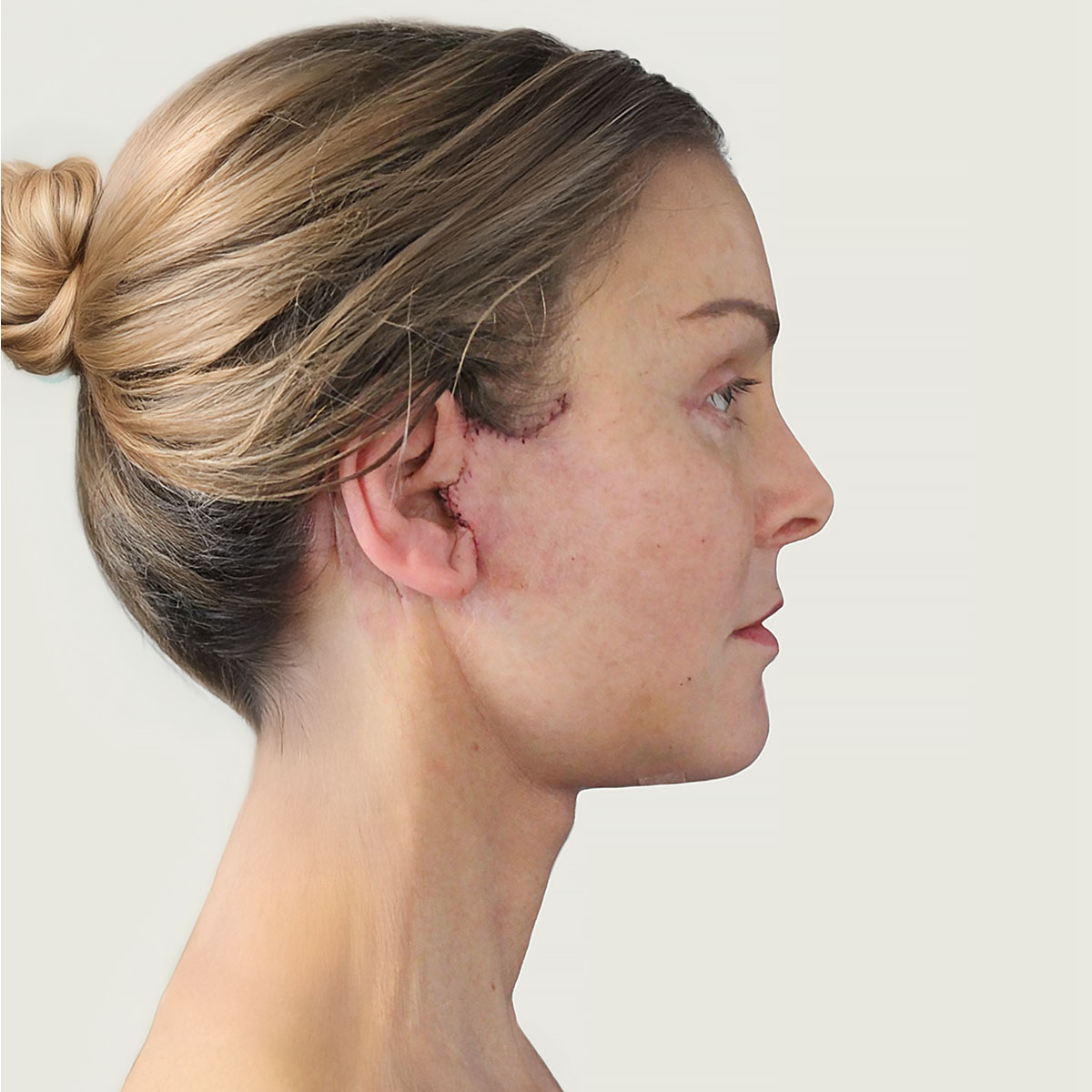
The scars are placed discreetly under the chin as well as inside and behind the ear.
Smooth, defined, and natural contour
The deep plane technique offers maximum potential to achieve the most beautiful neck, as every component can be sculpted when, like Louise Vennegaard Mielke, one is trained in it. The special feature of this technique is that we do not simply pull the skin backwards, but work to reposition tissue and musculature to their original, youthful position. By gently moving the deeper layers instead of tightening the surface, you achieve a beautifully defined jaw angle and a smoother, firmer neck profile.
This treatment is suitable if you
Experience loose skin or excess fat under the chin
Have visible bands or wrinkles on the neck
Wish for a more defined jawline and smoother neck contour
The treatment can stand alone – or be combined with a Deep Plane Facelift, fat injections, or skin rejuvenating treatments. The combination is always tailored to your needs and wishes.
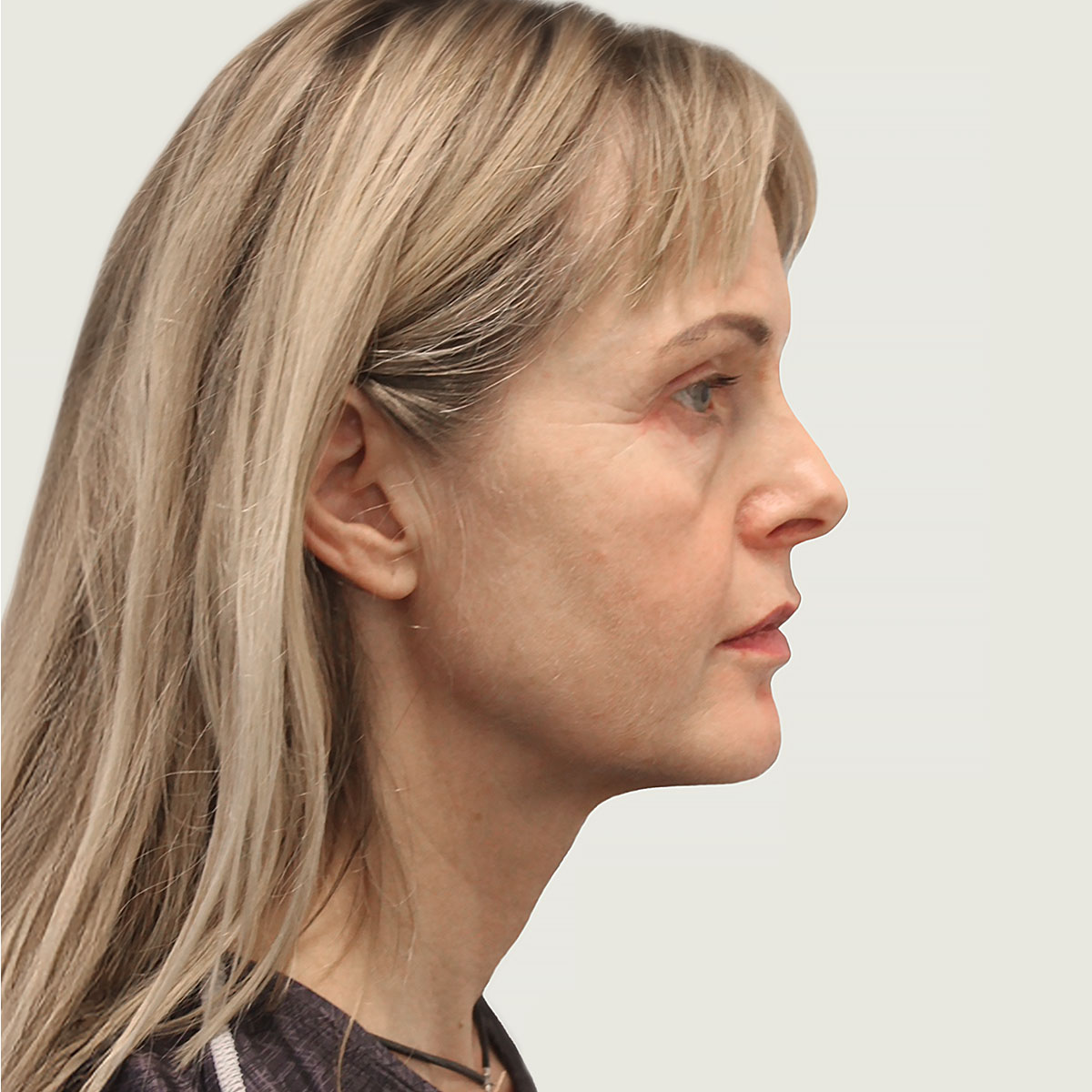
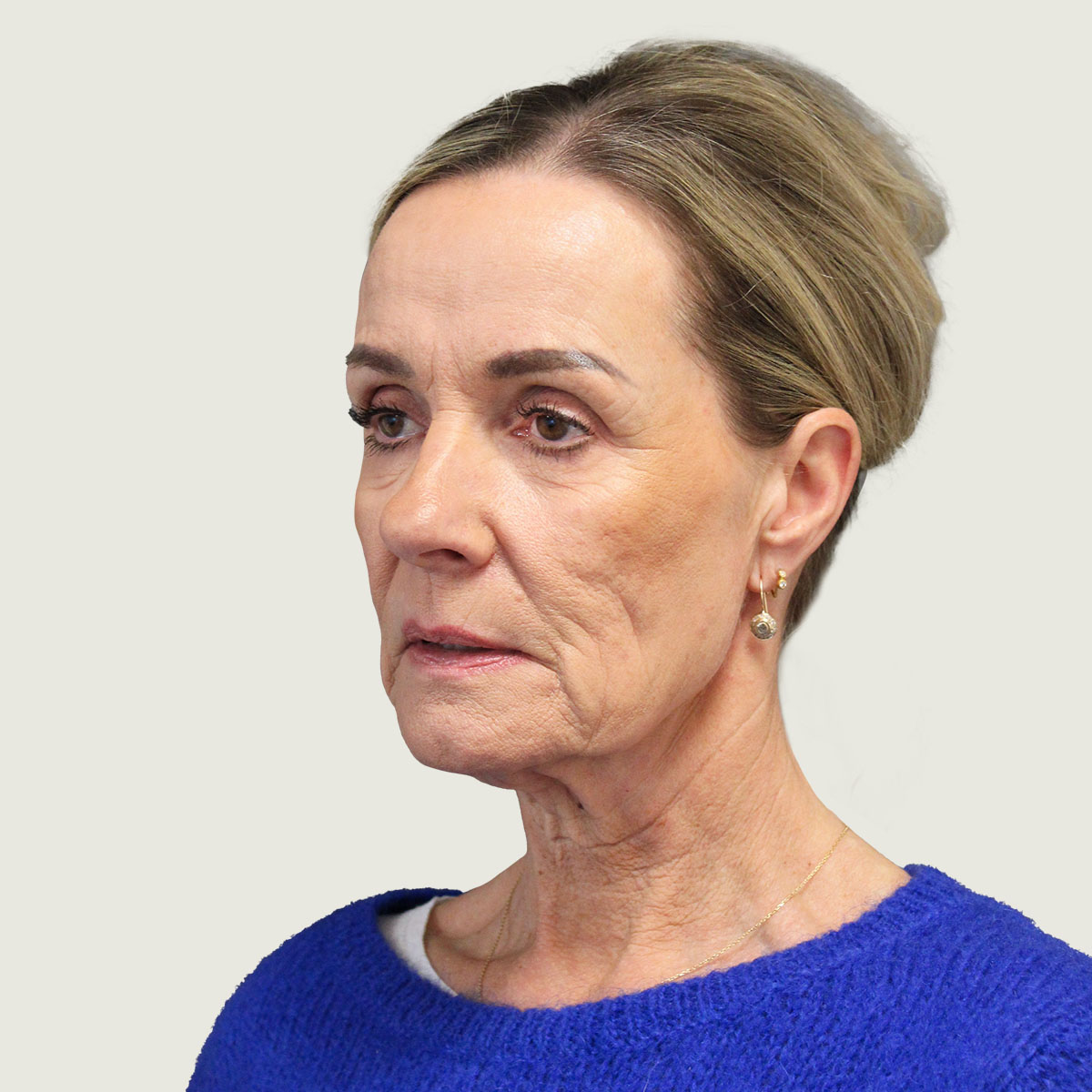
Before / after
Our before-and-after photos say more than words. Here you get an honest insight into how small adjustments can make a big difference – both in appearance and in confidence.
Plastic surgeon Louise Vennegaard Mielke was previously employed at Aleris, where these photos were taken.
Find answers to the most common questions about the treatment.
What is the difference between a Deep Plane Necklift and a minor neck lift?
What is unique about the deep plane technique is that the surgeon has the opportunity to sculpt deeper structures in the form of muscles and connective tissue, and to reduce enlarged or sagging salivary glands. This requires special training and skills, as well as specialised equipment to optimise safety.
Is it noticeable that I have had something done?
No. Most people who notice anything will simply think that you look better – but not be able to pinpoint why. The scars are placed as discreetly as possible and often become almost invisible over time.
How is the surgery performed?
The surgery is performed under general anaesthesia and typically lasts a few hours, depending on complexity and extent. Incisions are placed discreetly behind the ears and, if needed, into the hairline, as well as a small incision under the chin to access the midline structures. Through these small entry points, all the deep work is carried out – including muscle tightening, fat reduction, and tissue repositioning. The surgical techniques involve working in several layers with great precision to minimise scarring and promote healing.
After the surgery, you will be admitted for observation and rest at our hospital and can usually return home the following day.
Does it hurt?
The procedure is performed under general anaesthesia, and you will be pain-free upon waking. In the days after, the neck may feel tight or sore, and some experience numbness, which gradually disappears. Pain is most often managed with regular over-the-counter medication.
What risks should I be aware of?
As with any surgery, the procedure carries a risk of bleeding during and after the operation. However, if it is also necessary to reduce the size of the salivary glands located beneath the jawline, there is an increased risk of prolonged swelling and possible saliva accumulation.
During the consultation, the plastic surgeon will be able to determine with great certainty which structures need to be addressed in order to give you the optimal result.
Am I a suitable candidate?
The best candidates for a deep plane facelift are generally healthy, non-smokers who wish to soften the signs of ageing in the face and who have realistic expectations of their treatment. Health and lifestyle play a significant role in what can be achieved and in the longevity of your result, and during an initial consultation your treatment options will be reviewed in detail.
Can a neck lift stand alone?
Whether you can be offered an isolated neck lift or whether it is necessary to lift the face at the same time depends on an individual assessment, which will be explained to you in detail during your consultation. However, it is important to know that you will often not only achieve a better result on the neck lift itself by lifting the face at the same time, but it is also the most long-lasting solution. The reason is that the lift achieved in the neck is enhanced by pulling upwards in the face. The explanation lies in the fact that the facial and neck skin are connected to the same superficial muscle called the platysma. This is the muscle that creates the folds at the front of the neck, and it extends from the collarbone up to the level of the teeth. It is precisely this muscle that is tightened with a deep plane lift.
When can I return to work?
You are usually up and about the day after, but we recommend rest and recovery for 1–2 weeks. Most people prefer to wait 2–3 weeks before returning to work or larger social activities, depending on swelling and any bruising.
How long does the result last?
A Deep Plane Necklift provides a long-lasting result. Most people experience its effects for 10–15 years – and in many cases even longer – depending on lifestyle, genetics, and skin quality.
Do you still have questions?
You are always welcome to contact us. We are ready to answer your questions and help you move forward if you need guidance.



 DA
DA